

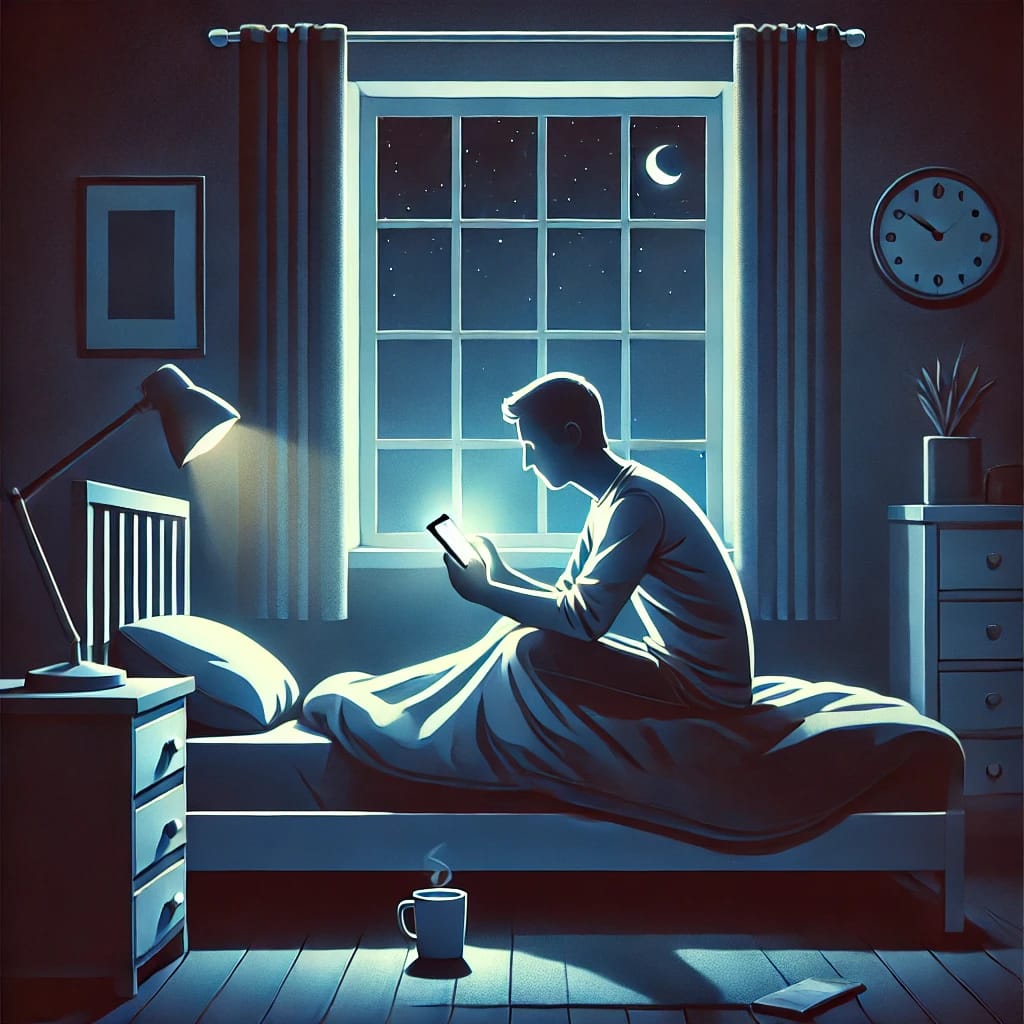

In today’s digital age, it’s become nearly impossible to avoid using our phones, even late at night. Whether we’re catching up on social media, reading the news, or watching videos, our phones have become an integral part of our night time routines. However, using your phone at night can have serious implications for your mental health, affecting everything from sleep quality to emotional well-being.
1. Disrupted Sleep Patterns
One of the most significant impacts of using your phone at night is its disruption to your sleep. The blue light emitted by screens interferes with the production of melatonin, a hormone that helps regulate sleep. When melatonin levels drop, it becomes more difficult to fall asleep, leading to restless nights and poor-quality sleep. This lack of rest can leave you feeling fatigued, irritable, and less focused the next day.
Additionally, engaging with your phone late at night can trick your brain into staying active, making it harder to unwind. Instead of relaxing before bed, you might find yourself stimulated by the content you’re consuming, whether it’s exciting, sad, or stressful.
2. Increased Anxiety and Stress
Social media, in particular, can contribute to heightened levels of anxiety and stress when used late at night. Scrolling through posts, reading the news, or comparing yourself to others can create a sense of overwhelm. Negative content, such as upsetting news or social media drama, can leave you feeling anxious or even depressed.
Moreover, engaging in online debates or reading opinions that conflict with your own can increase stress levels, particularly late at night when your mind is more vulnerable and less able to process information calmly.
3. Social Comparison and Emotional Well-being
Another downside to using your phone at night is the tendency for social comparison. On platforms like Instagram, Facebook, and TikTok, people often share the best versions of their lives—highlight reels that may not represent the full picture. Late-night browsing can leave you feeling inadequate, lonely, or as though you're missing out on experiences others are having. This comparison can have a direct negative impact on your self-esteem and emotional well-being.
4. Overthinking and Rumination
The quiet hours of the night can also bring about overthinking, especially when we’re on our phones. Whether it’s worrying about something you saw online, replaying a conversation in your head, or reflecting on what someone else posted, our minds tend to ruminate more when we’re trying to relax. Overthinking late at night can disrupt your ability to fall asleep and can even carry into the following day, affecting your mood and productivity.
Tips for Healthy Phone Use at Night
If you’re looking to improve your mental health and sleep quality, here are a few tips to reduce the negative effects of phone use at night:
Set a Curfew for Your Phone: Try to establish a phone curfew—at least 30 to 60 minutes before bedtime—during which you avoid using your phone altogether. Use this time for calming activities like reading, meditation, or journaling.
Use Night Mode: Many phones have a "night mode" feature that reduces blue light. Enabling this setting can help minimize the impact of screen exposure on your sleep cycle.
Avoid Social Media: If you struggle with comparing yourself to others, consider unfollowing accounts that make you feel bad about yourself. Limit your social media time, especially in the evening, and opt for content that makes you feel positive or calm.
Create a Relaxing Nighttime Routine: Instead of scrolling through your phone, try activities that help you unwind—whether it's reading a book, practicing deep breathing exercises, or listening to calming music.
Use Your Phone Mindfully: If you do use your phone late at night, be mindful of the content you engage with. Avoid upsetting or overly stimulating material and focus on things that relax or uplift you.
Final Thoughts
While phones can provide a sense of connection and entertainment, using them at night can have a profound impact on your mental health. Disrupted sleep, increased anxiety, and social comparison are just a few of the challenges that come with late-night screen time. By setting healthy boundaries with your phone and prioritizing your mental well-being, you can enjoy better sleep, improved mood, and a more peaceful mind.
Remember, taking care of your mental health is essential, and sometimes that means disconnecting from your phone when it matters most.